(800) 626-1267

Can Homeowners Appeal An HOA Violation?


Most communities have a fair and transparent process for resolving disputes. If you receive a notice, you can appeal a HOA violation and ask the board to review the facts before any fines are imposed.


What It Means to Appeal a HOA Violation

To appeal a HOA violation is to formally ask your association to reconsider a warning, fine, or enforcement action. The goal is not to argue with a neighbour. The goal is to present the board with the facts, provide evidence, and seek a reasonable outcome.

Your governing documents and state law governs appeals. That usually includes written notice, a chance to be heard, and a decision made by the board or a committee that did not issue the citation.


First Steps: Read the Notice and Rules

how to appeal an hoa violation

Start with the notice you received. Check the date, the rule cited, and what the association says you must do to cure the issue. Errors happen, so ensure the facts and deadlines are accurate.

Then open your declaration, bylaws, and rules. Look for sections on violations, hearings, and fines. You need to follow the procedure exactly to keep your appeal on track.


How to Appeal an HOA Violation

File your appeal in writing before the deadline. Keep it simple and clear. State why the violation is wrong, what you did to fix it, or why a fine is not fair in your case.

Then, you need to attach proof. Photos, emails, delivery receipts, contractor estimates, and neighbor statements can all be helpful. If you need more time to resolve the issue, please explain why and propose a suitable date.

Bring a calm tone to every step. You are more likely to get good results when your request is direct, complete, and respectful.

Some helpful documents you can gather include:

  • The violation notice and any follow-up letters
  • The exact rule or covenant section cited
  • Photos, timelines, receipts, or expert notes that support your position


Your Hearing: What to Expect

can you appeal an hoa decision

Most associations offer a hearing with the board or a committee. You will receive a date, location, and a time limit to speak. You can bring a support person or representative if your rules allow it.

At the hearing, stick to facts. Walk through what happened in order. Share your documents. Ask that any fine be waived, reduced, or held in abeyance while you cure the issue.

The board will deliberate in private and send a written decision. Keep this letter. It shows the outcome and your next steps.


Common Grounds to Challenge HOA Violations

You can challenge HOA violations when the facts or process are off. Perhaps the notice was sent to the incorrect address, or the cited rule does not apply to your property. It’s also possible that you’ve resolved the issue before the deadline, yet a fine was still posted.

Selective or inconsistent enforcement can also be a valid point. If similar cases were treated differently without a good reason, ask the board to explain and apply the rule evenly.

Another ground is hardship. If a short delay would avoid a fine and lead to compliance, ask for a brief extension. Boards often grant reasonable requests that end in a fix.


Fines and Fees: Can a Homeowners Association Fine You?

can homeowners association fine you

Many owners ask, can a homeowners’ association fine you for a rule breach? The answer is yes when the governing documents and state law allow it, and when due process is given.

Due process means receiving proper notice and having a chance to be heard before a fine is imposed. If those steps did not happen, include that in your appeal. Ask the board to reset the timeline and schedule a hearing.


Can You Appeal an HOA Decision After the Hearing?

If the board denies your request, you may still have options. Can you appeal an HOA decision again? It depends on your specific documents and the relevant state law. Some communities offer an internal dispute resolution step. Others allow mediation or arbitration.

If your state requires alternative dispute resolution before court, follow that path. It is often faster and less costly than a lawsuit, and it keeps the focus on solving the issue.


Keep It Calm and Productive

challenge hoa violations

A steady approach helps. Be on time for every deadline. Keep copies of all letters and emails. If you speak at a meeting, take notes about what was said.

Offer solutions. If a paint color doesn’t meet expectations, ask for a short time to repaint. If a fence is two inches over a height limit, propose a quick fix. Boards respond well to owners who show good faith.


What to Do in Special Situations

Contractor delays, illness, or supply issues can derail a quick cure. If that happens, tell the association early. Provide new dates and attach supporting documentation, such as estimates or order confirmations.

Seasonal limits can also matter. Landscaping and exterior work may need a specific window. Ask for a timeline that accommodates both weather and vendor schedules, and then follow through.

If you rent out your home, ensure that your tenant is aware of the rules. Owners are typically responsible for tenant violations, so consider including tenant training or lease updates in your plan.


Fairness, Consistency, and Board Roles

how to appeal an hoa violation

Boards must enforce rules fairly and consistently. They also must follow open meeting and due process rules set by state law. That balance protects property values and the rights of property owners.

If a director gave the citation, your documents may require a different group to hear the appeal. That separation helps ensure a neutral review and keeps trust in the process.


When to Get Legal Help

If the stakes are high or the facts are complex, it may be time to speak with a community association attorney. A brief consultation can clarify your rights, deadlines, and the best next step.

Going to court is the last resort. Most disputes are settled when owners and boards share facts early and agree on a sensible solution.


Appeal Smart

You do not have to accept a fine without a fair review. Use your documents, meet the deadlines, and present clear proof to appeal a HOA violation. A respectful, well-prepared appeal can save money, clear your record, and maintain good neighborly ties.

Seeking solutions for handling HOA appeals? Condo Manager provides a trusted and reliable community association management platform for self-managed associations and HOA management companies. Reach us online or call us today at (800) 626-1267 to learn more!


Related Articles:


Will Your HOA Benefit From HOA Crime Insurance?

Homeowners’ associations handle real money every day. Bank accounts, reserve transfers, vendor payments, and owner assessments all pass through the community’s books. That is why many boards look at HOA crime insurance to protect those funds. The goal is simple. If theft or fraud happens, the association has a safety net.


What is HOA Crime Insurance?

HOA crime insurance is a first-party policy that helps reimburse the association when money or securities are stolen through dishonest acts or fraud. It is sometimes called fidelity or employee dishonesty coverage, but modern policies reach beyond employee theft.

A crime insurance policy can respond to loss caused by board members, committee volunteers, the property manager, and outside parties, depending on how it is written.


Typical HOA Crime Insurance Coverage

hoa crime coverage

Policy forms vary, so always review your declarations and endorsements with your broker. In general, HOA crime insurance can include:

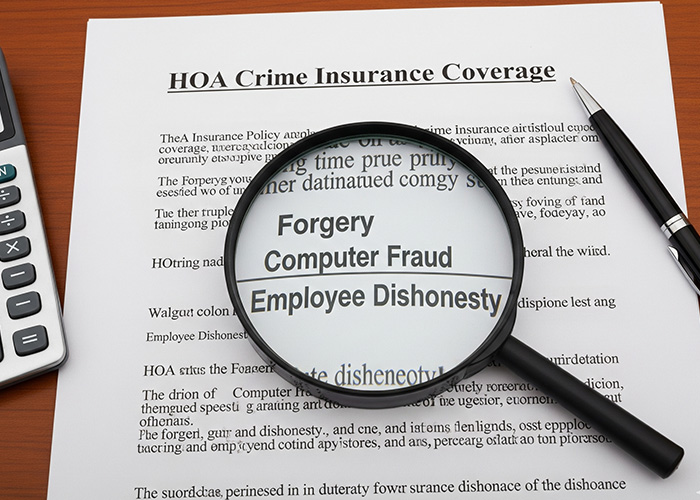
  • Employee or volunteer dishonesty that results in theft of money, securities, or property
  • Forgery or alteration of checks and drafts
  • Computer fraud that manipulates your systems to move funds
  • Funds transfer fraud, where criminals trick the bank into sending money
  • Social engineering fraud by endorsement, such as a convincing email that imitates a manager or board officer

Pay close attention to how the policy defines “employee.” Many HOAs add endorsements to ensure that board members, committee members, and management company staff are qualified for coverage.


What It Doesn’t Cover

Since it usually covers financial matters, you need to remember that crime insurance is not a catch-all.

For one, it does not address bodily injury or property damage, which sit under general liability, and it does not resolve governance disputes, which belong under Directors and Officers coverage.

Additionally, cyber liability, such as privacy claims or system outages, needs a separate policy unless your HOA crime insurance policy adds a specific endorsement. Loss that predates the policy period, falls outside the discovery window, or stems from errors without theft is also commonly excluded.


How Much HOA Crime Coverage Do You Need?

hoa crime insurance policy

The correct limit should match your true exposure. Your HOA can start by looking at three figures: your peak bank balance across operating and reserve accounts, your maximum single-day transfer, and the funds accessible to any one person with signing or online authority.

Many boards select a limit at least equal to peak operating cash plus reserves, while others tie the limit to the largest expected transfer.

The final decision should weigh premiums, deductibles, endorsements, and any lender or governing document requirements. With this, your board should review limits each year because reserve balances and project plans change.


Policy Structure

A strong HOA crime insurance setup lists the association as the insured, and it clearly addresses the role of the management company.

When applying for insurance, ask your broker to extend the “employee” definition to include board and committee members, key volunteers, and management company staff who handle your money.

You may also choose to include faithfulness or faithful performance endorsements for individuals in positions of trust. For these, discovery forms are preferred so that losses discovered during the policy period can be addressed, subject to the terms.


Practical Controls That Lower Risk

hoa crime coverage

Effective controls make theft more difficult and losses smaller. Think of them as everyday habits that support your HOA crime insurance rather than a one-time checklist.

Here’s what you need to keep in mind:

  • Require two approvals for every payment above a set threshold
  • Use Positive Pay and ACH blocks or filters with your bank
  • Segregate duties so the person who reconciles accounts cannot issue checks
  • Reconcile monthly and review bank statements directly, not copies
  • Call vendors using a known number before changing payment details
  • Use a lockbox or online portal for owner assessments

However, do remember that controls don’t replace insurance. Instead, they help prevent and detect problems earlier, which limits the size of any loss.


Questions to Ask Your Broker

A good HOA crime insurance policy should align with your community’s financial management practices. When you meet your broker, use these questions to guide the conversation so you can compare quotes on equal terms:

  • Does the employee definition extend to board and committee members, and to management company staff who handle our funds?
  • Are social engineering and funds transfer fraud included, or available by endorsement?
  • Is the form discovery or loss sustained, and what discovery period applies after cancellation?
  • Are limits separate for each insuring agreement, or shared under one aggregate?
  • How will the deductible apply if several parts of the policy respond to the same event?
  • Can limits be increased temporarily when a large reserve project is scheduled?

Bring recent bank statements, your governing documents, and the management agreement to the review. Clear paperwork speeds quoting and helps the board see which policy actually fits.


When HOA Crime Insurance Adds Clear Value

Having a broader HOA crime coverage is helpful when the association holds large reserves. It also benefits the association when one person has wide control over banking and payments or when vendor payments run high.

Other than that, having a crime insurance policy also matters during manager transitions or software changes, since workflows shift and errors are more likely. In these cases, a single event can strain the budget, and HOA crime insurance limits the financial damage.


When Minimal Coverage Might Be Enough

Some smaller communities keep simple finances, hold modest balances, and use strong bank controls. Payments are infrequent, dual approvals are built into the process, and monthly reconciliations are a routine part of the process. In those settings, a lower limit may be reasonable, as long as the board documents the logic and revisits the decision each year.


Yearly Program Review

hoa crime insurance policy

Treat the annual budget cycle as your cue to review HOA crime insurance. The aim is to align coverage with the expected flow of money in the coming year.

You can start by updating your operating and reserve balances and noting any large projects. This lets you show that its limits reflect real exposure.

Next, confirm that endorsements still fit after renewals or management changes, and walk through basic controls to ensure they work as intended.

Finally, verify the contact information for the carrier and agent, and keep it readily accessible so that the treasurer and president can reach them quickly if an issue arises.


Protecting Your Community

HOA crime insurance cannot stop theft, but it can keep a bad day from becoming a crisis. When coverage, limits, and controls work together, the association protects the money entrusted to it. A brief annual review ensures the plan remains aligned with your budget and projects.

Need efficient management solutions for your HOA community? Condo Manager provides a trusted and reliable community association management platform for self-managed associations and HOA management companies. Reach us online or call us today at (800) 626-1267 to learn more!


Related Articles:

HOA Xeriscaping: Is This The New Landscaping Go-To?

Many boards are asking the same question as water costs rise and droughts linger. HOA xeriscaping provides a practical way to reduce outdoor water use while maintaining the community’s attractiveness.


What is HOA Xeriscaping?

HOA xeriscaping is not a yard full of rocks. It is a planned landscape that utilizes climate-adapted plants, smarter irrigation, and ground covers that protect the soil.

Boards like it because it is flexible. You can preserve green space in key areas, then utilize drought-tolerant zones around the edges and in medians. The mix can match your brand, budget, and climate.


Why Xeriscape?

xeriscaping in hoa

Boards aim to lower costs without compromising curb appeal and property values. HOA xeriscaping achieves both goals by reducing irrigation use and alleviating pressure on operating budgets. Maintenance is steadier too, with fewer mow cycles, lighter fertilizer needs, and simpler repairs keeping common areas tidy.

Native, climate-adapted plants retain their color and texture throughout hot, dry months, while xeriscaping in HOA communities often aligns with local regulations and can qualify for rebates on turf replacement, drip systems, and weather-based controllers. Hydrozoning and smart controllers enhance resilience, enabling landscapes to handle heat waves, watering restrictions, and storms with reduced plant losses.

Principles That Work in Common Areas

xeriscaping in hoa
Shared spaces typically bear the majority of the watering and maintenance costs. Use the simple principles below to design beds that save water, look clean, and stay easy to care for.

  1. Plan by hydrozone: Group plants according to their water needs. High-traffic areas are typically located near entrances and signs. Low-use groups fill wide edges, slopes, and corners.
  2. Fix the soil first: Test the soil, then add compost where needed. Healthy soil holds moisture and nourishes roots, which in turn strengthens new plantings.
  3. Choose the right plant palette: Favor native or well-adapted species. Think in layers, with tall structure plants, mid-height fillers, and ground covers. Aim for year-round interest.
  4. Use hardscape and mulch wisely: Paths, boulders, and seating pods can break up wide beds. Organic mulch helps hold water and control weeds.
  5. Irrigate smarter: Use a drip system for beds and high-efficiency nozzles for your lawn. Add weather-based controllers and flow sensors to stop waste.
  6. Set a maintenance plan: Even low-water landscapes need care. Plan seasonal checks, pruning, mulch refresh, and drip inspections.


Policy and ARC Guidelines for Xeriscapes

Clear rules make adoption smooth. Establish standards for xeriscaping in HOA design guidelines to inform owners and vendors of the acceptable proposals.

Spell out allowed plant lists, mulch types, rock limits, colors, and edging styles. Define the amount of turf required, if any, and its location. Address defensible space in wildfire-risk areas with set distances and plant spacing.


Getting Homeowner Buy-In

Change is easier when people can see it. Build a small pilot bed near the clubhouse, then share before-and-after photos.

Host a short walkthrough with your landscape contractor so residents can ask questions. Share the watering data and savings a few months after the pilot.


HOA Xeriscaping in Front Yards

Some communities want front yards to match the new style. If so, give owners a template they can follow without guesswork.

Offer a pre-approved option with two or three layouts. Owners can pick a design, choose plants from an approved list, and submit a quick ARC form.


Maintenance Expectations and Vendor Coordination

xeriscaping in hoa
Low water does not mean no work. Use the checklist below to establish clear expectations with your contractor and maintain consistent performance.

  • Drip audits at least twice a year
  • Seasonal controller changes based on the weather
  • Mulch top-ups to maintain depth
  • Targeted weed control that protects beneficial plants
  • Pruning guided by plant habit, not by calendar


Common Pitfalls and How to Avoid Them

A few missteps can erase savings and frustrate homeowners. Watch for these issues and plan around them from the start.

  • All-rock yards: Large rock fields reflect heat, raise ambient temperatures, and invite weeds. Balance rock with plants and mulch.
  • Plastic sheeting: Solid plastic traps water on top and chokes roots. Use breathable weed barriers where needed.
  • Wrong mulch choice: Fine mulch can blow away. Select a stable chip size that matches your climate and slope conditions.
  • Poor drainage: Xeriscapes still need proper grading and catch basins. Fix drainage before planting.
  • Thirsty species: Avoid plants that need constant irrigation or heavy fertilizer. Confirm water needs at the planning stage.


Measuring Results and Reporting Back

Decide how you will track success before work starts. Use the metrics below to show progress to the board and homeowners.

  • Water use per irrigated acre
  • Gallons saved compared to the prior year
  • Cost per square foot to maintain
  • Plant survival rates through the first summer and first winter
  • Complaints and compliments logged after the change


Practical Steps to Launch

xeriscaping in hoa
A simple plan keeps the rollout on track and builds trust with residents. Use the steps below as a template, then adjust to your climate, budget, and timeline.

  1. Audit water and turf: Map leaks, overspray, and high-use zones. Pull the last 12 months of water bills to set a clear baseline.
  2. Pick pilot areas: Choose spots with high visibility and high water use. Include one sunny bed and one shaded bed to test plant performance.
  3. Draft standards: Update ARC rules for plant lists, rock limits, mulch types, spacing, and irrigation. Add photo examples to make submittals easy to review.
  4. Bid the work: Request itemized pricing for removal, soil prep, irrigation retrofit, plants, mulch, and first-year maintenance. Ask vendors to include any rebate-ready specs and paperwork.
  5. Communicate: Share mockups, a simple timeline, and a one-page homeowner guide. Host a short demo or walkthrough so residents can see the plan up close.
  6. Measure and share: Track gallons and costs monthly against your baseline. Post a short quarterly dashboard and capture resident feedback for the next phase.
  7. Train and hand off: Brief the onsite staff and the landscape crew on the standards and seasonal tasks. Schedule 30-day and 90-day walks to fix punch-list items early.


The Case for HOA Xeriscaping

For many boards, HOA xeriscaping is the practical next step. Begin by implementing a pilot, updating ARC standards, and then tracking results to demonstrate savings, reliability, and curb appeal clearly. Done this way, the community gains a landscape that looks good, costs less, and fits the climate.

Looking for efficient management solutions for your HOA community? Condo Manager provides a trusted and reliable community association management platform for self-managed associations and HOA management companies. Reach us online or call us today at (800) 626-1267 to learn more!


Related Articles:

How HOAs Can Show Appreciation To Workers This Labor Day

How can HOAs show appreciation to workers this coming Labor Day? After all, the upcoming holiday is a great moment to pause and thank the people who keep a community running. From maintenance techs to lifeguards and landscapers, a simple gesture can set the tone for the rest of the year.


Recognizing Workers on Labor Day

Labor Day is about workers and the value of work. That includes on-site staff, vendor crews, and the community manager’s team. When HOAs show appreciation in a clear and personal way, people feel seen, which supports service quality and morale.

Start by identifying every role that touches the community. Think beyond the regular faces at the clubhouse. Include night security, janitorial teams, gate attendants, seasonal pool staff, mailroom support, and volunteer committee members. A complete list prevents anyone from being missed and shows respect for the whole operation.


How HOAs Show Appreciation on Labor Day

Apart from knowing who to appreciate, here are some ways to recognize and show appreciation to the people who are keeping your HOA operations afloat:


1. Set a Simple Plan and Budget

A small, thoughtful plan beats a last-minute rush. Define your budget, outline a short timeline, and choose one meaningful gesture as the core. Determine who will be responsible for drafting messages, coordinating food or tokens, collecting names for recognition, and handling vendor communication. Keep records for next year. A short checklist with owners and due dates helps the board deliver on time.


2. Personal Thanks That Feel Real

A genuine thank-you still matters. When HOAs show appreciation with direct, personal notes, people remember. Ask board members to handwrite short cards that mention specific wins. Examples include fast responses to service requests, extra effort during storms, or steady work that keeps common areas clean. If handwriting is not feasible, a printed card with space for a short line from a board member still feels personal.

Pair notes with a friendly in-person visit on or near Labor Day. A quick hello and a handshake go a long way. Keep it brief and sincere.


3. Food that brings people together

Food is simple and popular. It can be breakfast burritos on a shift change, a pizza lunch, or a snack station with fruit, granola bars, and cold drinks. Ask vendors about shift times so the crew that starts early does not miss out. Check for dietary needs when possible. Label items. Keep leftovers safe and clean up promptly.

To manage costs, consider inviting a local shop to sponsor a tray or offering a discount. Many are happy to support neighborhood workers, especially when the HOA gives a public thank-you in the newsletter.


4. Small tokens with clear boundaries

leaf blowing | hoas show appreciation
Tokens should be modest and fair. Options include a water bottle, a cooling towel, a sunscreen kit for outdoor crews, or a coffee gift card. If you offer cash-like items such as gift cards, note that tax rules may apply. Track what you give, keep receipts, and check with your manager or accountant about reporting. Clear, written guidelines avoid confusion and support good governance.


5. Recognition that shines a light on the work

Public recognition is powerful when it is specific and respectful. Use the community newsletter, website, and lobby screens to highlight the efforts of people and teams. Keep tone warm and short. Share a few photos of crews maintaining the grounds, servicing mechanical rooms, or setting up events, with permission. When HOAs show appreciation in public channels, workers see that their work matters to residents, not just supervisors.

You can also create a simple “Thank You Wall” in the clubhouse for the week of Labor Day. Provide sticky notes and pens so residents can leave short messages. Rotate the notes into a digital collage for the following newsletter.


6. Include Everyone Who Keeps the Community Running

Labor Day appreciation should include more than salaried staff. Vendor crews and seasonal workers keep the community safe and clean. That includes landscaping, arbor care, pool service, janitorial, gate and patrol, elevator service, and pest control. When HOAs show appreciation across all teams, it builds mutual respect and helps retain reliable partners.

Be mindful of vendor policies. Some companies limit gifts to small amounts. So, you should ask the vendor contact what is allowed. If gifts are not permitted, a public thank-you and a catered snack on-site usually works.


7. Safety and Training as Appreciation

Investing in safety is a form of thanks. Refresh first-aid kits. Check AED pads and batteries. Walk key areas for hazards like loose handrails, poor lighting, or slippery surfaces. Invite vendors to flag risks they see daily. Schedule a short refresher on incident reporting for staff and committee leads. When HOAs show appreciation through safer work areas and clear processes, people feel valued and protected.


8. Keep it Compliant and Transparent

Good intentions should match good records. Confirm that any spending aligns with the governing documents and the approved budget line, such as community events or staff appreciation. If you provide taxable gifts, document them properly. Keep a simple log of what was given, to whom, and when. Share a short recap in the next board meeting minutes so the community sees how funds were used.


9. Let Residents Have a Role

Residents often want to help. Invite them to add notes to the Thank You Wall, send a digital message, or sign the group card in the lobby. Remind everyone to keep messages kind and specific. Consider a volunteer crew to handle setup and cleanup. When HOAs show appreciation as a community, it creates a shared culture of respect.


10. Stretch the Impact Beyond One Day

floor cleaning | hoas show appreciation
Labor Day can start a year-round habit. Add a small recognition line to monthly board agendas. Try a “Service Spotlight” in each newsletter. Mark work anniversaries for key roles. Hold a short appreciation moment after major projects or weather events. Small actions, repeated, build trust.


11. Measure What Worked

Simple feedback helps the board improve each year. Ask staff and vendors what they found meaningful and what they did not. Track turnout, costs, and comments. Note any hiccups with timing or supplies. Use what you learn to plan next time. When HOAs show appreciation and review the results, the gesture stays fresh and thoughtful.


Celebrating  Through Appreciation

Labor Day is a chance to say thanks with care and clarity. When HOAs show appreciation in ways that are personal, fair, and well planned, workers feel supported and communities feel stronger. Start small, keep it sincere, and build on what works.


RELATED ARTICLES:


How To Narrow Down And Focus On Your HOA Meeting Agenda

Any type of meeting can quickly lose direction without a solid plan. A focused HOA meeting agenda keeps everyone on the same page and makes sure nothing important falls through the cracks. Creating an agenda that works starts with knowing what to include and what to leave out.


Why a Clear HOA Meeting Agenda Matters

A well-organized HOA meeting agenda helps the board stay efficient and accountable. It also provides structure to ensure everyone uses time productively.

Here’s what a strong agenda can do for your meetings:

  • Reinforce your HOA meeting objectives
  • Avoid getting stuck on less important topics
  • Build transparency and trust with homeowners
  • Ensure compliance with your governing documents and state laws

Without one, HOA meetings may spiral into off-topic conversations, leaving critical issues unresolved.


Set Your HOA Meeting Goals First

Before drafting the agenda, define your HOA meeting goals. Are you reviewing financials? Finalizing a contract? Planning community events? Knowing the purpose of the meeting makes it easier to prioritize discussion points.

Here are a few common goals HOAs may have:

  • Approving the annual budget
  • Discussing maintenance projects
  • Reviewing committee reports
  • Addressing homeowner feedback

Once the goal is set, use it as your filter. If an item doesn’t support that goal, it may not belong on this meeting’s agenda.


Prioritize Essential HOA Agenda Items

A good HOA agenda separates critical topics from those that can wait. Start with time-sensitive items or issues that require board action.

The first few spots on the agenda should go to:

  • Approval of previous meeting minutes
  • Treasurer’s report or financial updates
  • Any pending decisions from prior meetings
  • Items required by law or your bylaws

Other HOA agenda items, such as general discussion topics or homeowner concerns, can come later, if time allows.


Limit the Agenda to a Manageable Length

Packing the agenda with too many items might seem productive, but it often backfires. Board members feel rushed, and essential conversations are cut short.

As a general rule:

  • Keep regular meetings under 90 minutes
  • Aim for 5–7 agenda items max
  • Leave time for open discussion at the end

If your list is too long, consider splitting it between meetings or using a special meeting to cover major topics.


Stick to Your HOA Agenda Requirements

Different states and governing documents have specific HOA agenda requirements. These rules often dictate when the HOA needs to post the agenda, what the agenda must include, and its format.

For example:

  • California’s Davis-Stirling Act requires agendas to be posted at least four days before a board meeting
  • Florida law mandates written notice with the agenda for certain decisions, like special assessments
  • Some bylaws require topics like financials or committee reports to appear in every meeting

Double-check your documents to make sure your agenda meets all legal and internal guidelines.


Involve Stakeholders Early

If you’re trying to focus your HOA meeting agenda, involving others early can help. Board members, committee chairs, and even property managers can help identify what matters most right now.

A few ways to gather input:

  • Ask board members to submit agenda items one week prior
  • Review recent emails or concerns from homeowners
  • Meet briefly with your HOA manager to identify priorities

This collaboration avoids last-minute changes and keeps the agenda relevant.


Use Templates to Save Time

community meeting | hoa meeting agenda
Using a consistent format helps reduce confusion and ensures no key sections are forgotten. Most HOAs benefit from a standard agenda template tailored to their bylaws.

Here’s a basic outline many associations follow:

HOA Board Meeting Agenda

  • Call to Order: This officially begins the meeting and signals that business is about to proceed.
  • Roll Call: This confirms which board members are present and whether a quorum has been met.
  • Approval of Previous Minutes: This allows the board to review and formally approve the written record of the last meeting.
  • Treasurer’s Report: This presents the HOA’s current financial standing, including income, expenses, and any budget updates.
  • Old Business: This section addresses unfinished issues or projects also discussed in previous meetings.
  • New Business: This introduces new topics, proposals, or decisions that the board needs to consider.
  • Open Forum (if applicable): This allows homeowners to share concerns or ask questions directly to the board.
  • Adjournment: This marks the formal close of the meeting once all agenda items have been covered.

Templates also help ensure compliance with your HOA agenda requirements and keep things running smoothly each time you meet.


Stay Focused During the Meeting

Even the best-planned agenda can go off track during the meeting. To stay on course:

  • Assign estimated times for each item
  • Designate a facilitator to move things along
  • Table discussions that go off-topic or take too long
  • Avoid turning board meetings into community-wide complaint sessions

The more disciplined you are with time and scope, the more effective your meetings will be.


Allow Flexibility for Urgent Matters

While staying focused is important, your agenda should allow some flexibility. Emergencies or timely community concerns may need to be addressed even if they weren’t included in the original agenda.

That said, some states have strict rules about adding items to the agenda even after publication. For example, in California, the board generally can’t vote on non-agenda items unless there’s an emergency. Always check your state laws and HOA bylaws before deviating.


Review and Improve After Each Meeting

review | hoa meeting agenda
At the end of each meeting, take a few minutes to assess:

  • Did we meet our HOA meeting objectives?
  • Did we finish the agenda within the expected time?
  • Were any items skipped or rushed?
  • Were board members prepared?

Use this feedback to fine-tune your approach for the next meeting. Over time, your board will become more efficient, and your HOA meeting agenda will be easier to manage.


A Way to Organize

An organized HOA meeting agenda helps board members stay productive and keeps meetings on track. With clear goals, prioritization, and legal compliance, your agenda can be a valuable tool, not a checklist you struggle to finish.

Looking for modern solutions in managing your HOA or condo community? Condo Manager provides a trusted and reliable community association management platform for self-managed associations and HOA management companies. Reach us online or call us today at (800) 626-1267 to learn more!


Related Articles:

Should Vendor Insurance Be a Non-Negotiable With Contractors?

Vendor insurance plays a crucial role in protecting homeowners associations and contractors alike, offering a safety net that’s too valuable to ignore. Is it really non-negotiable? Let’s dive into what makes this coverage essential.


Vendor Insurance and Its Importance

Vendor insurance covers independent contractors and service providers working within your HOA community. From landscapers to pool technicians, this coverage ensures that when accidents or property damage occur, your association isn’t left holding the bill. Requiring vendor insurance is a necessary part of risk management when bringing people into your community.

By requiring vendor coverage, your HOA shifts financial responsibility for injuries, damages, or legal claims from the association to the contractor’s insurer. Without it, a single accident, such as someone tripping over a hose or damaging a sprinkler system, can result in significant costs and liability. That financial burden quickly outweighs any inconvenience of confirming insurance coverage upfront.


Types of Contractor Insurance Every HOA Should Require

Vendor insurance offers essential protections that help shield HOAs from risk. Here’s a brief summary of the key coverages your association should require:

  • General Liability Insurance covers bodily injury or property damage caused by the vendor while performing work in the community.
  • Workers’ Compensation Insurance protects the vendor’s employees if they are injured on the job, ensuring the HOA is not held responsible for medical costs or lost wages.
  • Commercial Auto Insurance provides coverage if the vendor’s vehicles are involved in an accident while carrying out HOA-related tasks.
  • Professional Liability Insurance covers mistakes or omissions in professional services, such as design work or consulting, when applicable.
  • Named Additional Insured Endorsement extends the vendor’s liability coverage to include the HOA, allowing the association to access the vendor’s policy in case of a claim.
  • Waiver of Subrogation prevents the vendor’s insurance company from trying to recover costs from the HOA after paying out a claim.

Requiring these specific types of contractor insurance ensures the HOA has coverage against most common risks. Without them, you may face considerable financial exposure if something goes wrong.


How to Effectively Require Vendor Insurance in Contracts

Incorporating insurance into your vendor contract wording is simple, yet critical. Here’s what to include:

  • Minimum coverage limits: Set realistic and adequate coverage levels—say, $1 million general liability per occurrence and $2 million aggregate.
  • Named Additional Insured: The HOA should be listed as an additional insured on the contractor’s policy.
  • Certificate of Insurance: Contractors must provide a certificate of insurance before work begins and on renewal, with updates provided before the policy expiration.
  • Waiver of subrogation: Prevents the contractor’s insurer from pursuing the HOA for reimbursement.
  • Endorsements and policy terms: Ensure coverage applies before, during, and after the job.

These requirements send a clear message: vendor coverage isn’t optional. A well-crafted contract helps protect your HOA and encourages responsible vendor behavior.


Benefits of Enforcing Vendor Insurance for HOAs

coins under umbrella | vendor insurance
By setting clear insurance requirements for all contractors, your board reduces risk exposure while fostering professional relationships with vendors who value accountability.

Here’s why enforcing vendor insurance is a smart move for any association:

  • Financial protection: Vendor insurance shifts the financial burden of accidents or property damage away from the HOA. This helps safeguard the community’s reserve funds and avoids unplanned expenses from vendor-related incidents.
  • Legal coverage: When the HOA is named as an additional insured on the vendor’s policy, it can tap into that coverage if a claim arises. This legal protection ensures the HOA won’t have to shoulder costly litigation or settlement fees on its own.
  • Vendor accountability: Requiring vendor insurance encourages contractors to operate responsibly and maintain professional standards. It also signals to vendors that your HOA expects proper risk management, creating a foundation for better business partnerships.
  • Budget stability: Unexpected claims or damages can throw off an HOA’s annual budget. With vendor insurance in place, the cost of accidents is absorbed by the contractor’s policy, helping the association avoid sudden financial strain.
  • Policy consistency: Maintaining a consistent vendor insurance policy ensures that board decisions are fair and transparent. It eliminates the guesswork in vendor management and ensures that every contractor, regardless of the job size, meets the same safety and insurance standards.

Handling Vendors Who Can’t Provide Insurance

What if a preferred vendor can’t supply coverage? You still have several options to go with. Try the following:

  1. Secure vendor coverage yourself. Some HOAs buy blanket liability insurance to cover vendors, then build it into vendor rates. It’s more complex, though.
  2. Require uninsured vendors to carry a bond. A bond provides some financial guarantee if the vendor fails to deliver or causes damage.
  3. Create a vendor insurance pool. Partner with other HOAs to negotiate group rates for vendors.
  4. Vetting process only insures insured peers. Allow work only from vendors who have the necessary contractor insurance.

By making documented proof of insurance or bond a must, HOAs maintain consistent standards without making exceptions.


Staying Compliant and Up-to-Date With Insurance Requirements

are you covered | vendor insurance
Insurance policies evolve, as do coverage limits and compliance laws. Here’s how your HOA can stay current:

  • Review annually. Update required policy limits and coverage types every HOA fiscal year.
  • Monitor policy expiration. Use automated tools or reminders to obtain fresh certificates of insurance.
  • Communicate with vendors. Send reminders, and have staff or volunteers track compliance.
  • Consult insurance professionals. An HOA insurance broker can help update vendor insurance programs and best practices.
  • Paper trails matter. Maintain a folder (digital or physical) with all certificates, letters, and contract endorsements.

Consistent oversight ensures vendor insurance remains more than just a one-time check but an ongoing protection strategy.


Finding Adequate Coverage.

Vendor insurance is a requirement for HOAs to manage risk, protect resources, and uphold accountability. Making it a non-negotiable in all contractor relationships is simple, smart, and ultimately saves time, money, and stress.

Do you need better management solutions for your HOA community? Condo Manager provides a trusted and reliable community association management platform for self-managed associations and HOA management companies. Reach us online or call us today at (800) 626-1267 to learn more!


Related Articles:


Having An HOA ARC Committee May Be A Good Idea

Creating an HOA ARC committee can provide numerous benefits for HOAs by ensuring consistent architectural standards and fostering community harmony.  For many associations, having a dedicated oversight body helps streamline home improvement requests while protecting property values.


What is an HOA ARC Committee?

Also known as an HOA architectural review control committee or HOA architectural review committee, the HOA ARC committee reviews and approves exterior alteration requests submitted by homeowners. These may include requests for changes in paint colors, fence installations, roof replacements, additions, and other modifications with a visual impact. Their main objective is to maintain design consistency, safeguard property values, and uphold community aesthetics.

Standard guidelines empower the HOA ARC committee to review proposals based on predefined criteria. If an HOA doesn’t have this committee in place, many residents might make changes that do not sync well with the neighborhood’s character. In even worse cases, they might make changes that violate local regulations.


Key Benefits of Creating an HOA ARC Committee

Having a dedicated ARC committee for your HOA brings numerous benefits to the table. Here are some of them:


1. Streamlined Decision-Making and Consistency

If you have an HOA ARC committee, residents would know precisely where and how to submit applications. By providing transparent processes, you also minimize confusion and potential frustration. Additionally, the committee’s consistent application of guidelines ensures fairness. Decisions rooted in written policies reduce subjectivity, helping avoid accusations of favoritism.


2. Protecting Property Values Through Design Control

One of the core reasons for having an HOA architectural review control committee in place is to preserve home values. Uncoordinated modifications, such as mismatched siding or out-of-place fencing, can negatively impact the value of neighboring homes. With an ARC in place, prospective buyers enjoy cohesive streetscapes, improving a property’s curb appeal and resale potential.


3. Legal and Insurance Safeguards

Many insurance policies and lenders require that exterior changes comply with HOA standards. If you have an HOA architectural review committee, there will be a group that can provide documented approval trails and design compliance documentation. Those documents may be vital if you are faced with liability or damage issues.

Apart from providing documentation, the ARC committee can ensure homeowners comply with local zoning and building codes. It safeguards the HOA from legal liability and reputational harm.


4. Clear Communication Channels

A dedicated HOA ARC committee provides homeowners with a known point of contact for questions and applications. This helps minimize misunderstandings while making the process transparent, as homeowners know precisely where their requests stand.

The committee can also educate residents about regulations like paint palettes, roofing materials, perimeter walls, and landscaping priorities.


5. Enhancing Community Engagement

ARC homeowners association volunteers often represent a cross-section of the community. This gives the committee a perspective on common homeowner concerns.

Well-run HOA ARC committees host design workshops, guideline review sessions, and neighborhood walkthroughs to gather input from residents. These collaborative efforts strengthen community ties and increase buy-in to the architectural process.


How to Establish an Effective ARC Committee in Your HOA

What should you do if your HOA doesn’t have an ARC Community yet? Here are some steps commonly taken to create an ARC committee for your community.


Clarify Authority in Governing Documents

committee documents | hoa arc committee
Begin by checking your community’s bylaws and covenants to confirm that the HOA board has the authority to form an ARC committee for the HOA. If those documents are unclear, you should consider updating them through member votes to formalize the committee’s role, responsibilities, and powers.


Develop a Clear ARC Application and Guidelines

The heart of effective architectural control lies in clear guidelines.

The HOA ARC committee should craft a detailed manual covering alteration types, required forms, material and color standards, review timelines, and appeal procedures. These guidelines should be easily accessible either online or through printed community resources.


Recruit Committee Members Strategically

Create a diverse and qualified HOA ARC committee by recruiting volunteers with relevant backgrounds, such as contractors, designers, long-term residents, or individuals with experience in planning. A good committee reflects community diversity and brings a variety of skill sets to the review process.


Standardize the Review Process

Streamline your process with standardized forms and submission requirements, such as site plans, color chips, and contractor information.

You also need to establish clear timelines and encourage homeowners to communicate and provide feedback during the review process. Make decisions in writing with explanations linked to guideline specifics.


Establish an Appeals Process

Even the most transparent committees can have disagreements with homeowners. Provide a straightforward appeals route, either to the HOA board or a special review panel. This ensures residents feel heard, improving their confidence in the ARC process.


Provide Training for Committee Members

Consistent training prevents arbitrary decisions. Provide training on design principles, legal and insurance requirements, evaluation criteria, and communication standards. For this, you can find resources, including expert speakers, peer-reviewed best practice sessions, and periodic refresher workshops.


Common Challenges and Proven Solutions

There are several common challenges that an HOA may encounter regarding community architecture. When you have an ARC committee, you also easily reach solutions for these common problems.


Challenge Solution
Delays in reviews Use standardized forms, set clear timelines, and delegate tasks to subcommittees.
Ambiguity in guidelines Regularly reassess and refine based on homeowner feedback.
Perceived bias Enforce conflict-of-interest policies, encourage rotational membership, and rotate chairs.
Homeowner frustration Offer pre-application consultations and clear feedback.
Scope creep Define what projects require approval and update guidelines when necessary.


Integrating the ARC Committee with the HOA Board and Vendors

In addition to reviewing requests and guiding residents with their modifications, an ARC committee can also assist with coordination. They can ease the board’s burden when dealing with vendors, becoming a bridge. Here’s how they can help:


Regular Updates to the Board

The HOA architectural review control committee should submit periodic reports covering applications processed, outstanding requests, and any guideline changes. These updates promote transparency, enabling the board to monitor functionality and community impact.


Vendor Coordination

ARC committees must coordinate with vendors, such as landscape contractors, ARChitects, and painters, who work in the community. Please provide them with access to updated guidelines and forms so that applications enter the approved workflow from the outset, reducing missteps and expediting compliance.


Budgeting and Resources

Establishing and maintaining a functional HOA ARC committee may require annual funds for design consultants, legal reviews, software, and outreach. Build a budget that accounts for staff resources, training, and administrative tasks. Highlight long-term savings, such as dispute avoidance and improved sale prices, to justify expenditures.


Best Practices for Long‑Term ARC Success

guidelines in blocks | hoa arc committee
Not all ARC committees are perfect. However, yours can stay effective by avoiding too many pitfalls. Here are some best practices that can help out:

  1. Annual Guideline Review: Update forms, policies, and standards annually to reflect evolving building techniques, materials, and trends.
  2. Maintain an FAQ and Resource Library: Provide online and printed resources to help homeowners self‑educate before applying.
  3. Measure Committee Performance: Track key metrics such as average review time and homeowner satisfaction, aiming to resolve 90% of requests within the stated timelines.
  4. Celebrate Compliance: Publicly recognize homeowners with exceptional projects. This encourages best‑practice modeling.
  5. Take Advantage of Technology: Utilize digital submission platforms with reminders and status tracking to streamline communications and minimize paperwork.


A Good Idea

There are many things an HOA ARC committee can offer. One of the biggest ones is providing a structured, transparent, and fair process for managing exterior modifications. By safeguarding design standards and property values, the committee creates a harmonious living environment that benefits every resident.

Do you need better management solutions for your HOA community? Condo Manager provides a trusted and reliable community association management platform for self-managed associations and HOA management companies. Reach us online or call us today at (800) 626-1267 to learn more!


Related Articles:

Tips For Hosting A 4th Of July HOA Potluck Party

A well-run 4th of July HOA potluck can easily bring neighbors together and help create that elusive “sense of community” every board talks about. However, as with any event involving people, food, and fireworks, planning is crucial.


Start With the Right Invitation

You can’t have a good 4th of July HOA Potluck without participation. Participation starts with the invitation. Timing is key, so send out those invitations early, ideally 4-6 weeks in advance. People’s summer calendars fill fast.

The tone of the invite matters, too. It should sound warm, welcoming, and festive, not like a mandatory HOA compliance notice.

Also, regardless of how you send these invitations out, provide people with a way to RSVP so you can track attendance.


Choose a Spot That Works for Everyone

Will this be an outdoor HOA picnic on the greenbelt? Poolside gathering? Clubhouse affair? Whatever location you pick, accessibility matters.

Think about:

  • Proximity to parking
  • Restroom access
  • Shade or shelter options (umbrellas, tents, etc.)
  • ADA accessibility
  • Seating (and how much folks will need to bring themselves)

Sometimes the perfect location means getting a little creative. In one community we worked with, the HOA partnered with a neighboring school to use their shaded outdoor pavilion—a great move that made the event far more comfortable in the July heat.


Set the Time Thoughtfully

Not everyone wants to be out late on a holiday, especially families with young kids or seniors in the neighborhood. Setting your 4th of July HOA Potluck for late afternoon (say, 4 to 7 PM) works well: folks can eat, mingle, and still catch fireworks if they want.

Or consider splitting the difference with a late lunch HOA picnic, letting people come and go. That helps accommodate those with other family plans.


Food Coordination: The Heart of Any HOA Potluck Party

It’s a no-brainer that most people come to a 4th of July HOA potluck for the food. While “bring your own dish” sounds simple enough, a bit of behind-the-scenes coordination helps avoid the dreaded six-pasta-salads-and-no-dessert scenario.

Here’s one approach you can take: Break up the neighborhood roster into sections by street or unit and assign each group a specific dish type, such as mains, sides, desserts, or beverages. This keeps the spread balanced and ensures everyone contributes.

Alternatively, you can use online signup forms to let residents volunteer for specific items. These platforms help track contributions without a flood of “who’s bringing what?” emails.

Here are a few extra tips to help you along the way:

  • Encourage dishes that travel well. It might be a good idea to skip the ice cream, even if it’s summer.
  • Remind contributors to label anything with common allergens
  • Provide plenty of non-alcoholic drinks. After all, the July heat and cocktails don’t always mix

Don’t forget to have enough table space. Even the tastiest spread won’t shine if there’s no room to serve it.


Keep in Mind: Safety First

mother and child smiling | 4th of July HOA Potlcuk
Whenever an HOA hosts a gathering, liability and safety sit quietly in the background. You don’t want to dampen the holiday spirit, but you do need a few sensible precautions.

If your community allows fireworks, clearly communicate safety zones and time restrictions. Better yet, coordinate with local authorities to direct residents to public displays instead of encouraging at-home pyrotechnics.

For food safety, simple steps make a big difference. Here are some things to keep in mind:

  • Set up shaded serving areas when possible
  • Supply hand sanitiser stations
  • Encourage residents to keep cold foods chilled and hot foods warm

Additionally, it never hurts to have a board member or volunteer monitoring common areas casually, ready to step in if needed.


Think Beyond the Food

Of course, food is the heart of any 4th of July HOA Potluck. But don’t stop there. The best gatherings layer in little extras to keep things festive. Some ideas:

  • Kid-friendly lawn games: cornhole, giant Jenga, bubbles
  • Simple live music: a neighborhood guitarist or portable speaker playlist
  • Photo corner: think fun red-white-and-blue props for casual snapshots
  • Decorations: balloons, banners, tablecloths—easy ways to set the mood

Yes, sparklers and glow sticks can add fun when the sun starts to set. However, you need to check your HOA’s and city’s fireworks rules first. After all, it’s better to be safe than to deal with liability later.


Communicate Rules Clearly

Here’s the part where many HOA boards trip up: coming on too strong with “event guidelines.” Certainly, you need to cover aspects such as noise restrictions, alcohol use, and pet policies.

However, remember to frame these rules lightly. Write them out as friendly reminders instead of rigid rulebook entries. By presenting these notes conversationally, you’ll avoid sounding heavy-handed and help everyone relax.


Setting the Right Tone

One thing seasoned board members know: the emotional tone of an event matters. That tone often starts with leadership.

If your HOA picnic feels too rigid or over-programmed, people may hesitate to relax. Too loose, and it can drift toward disorder. Strive for something in between. It should be structured enough to guide residents and casual enough to encourage conversations and mingling.

A friendly, conversational emcee (perhaps a board member with natural charm) can help bridge any gaps, providing light announcements and reminders as the afternoon unfolds.

Most importantly, model graciousness. If the board shows patience and good humour, it sets the tone for the entire gathering.


Manage Setup and Clean-Up Logistics

giving food | 4th of July HOA Potlcuk
One thing board members sometimes underestimate is the amount of work that goes into event setup and cleanup. Don’t try to wing this day-of. Assign a small volunteer crew in advance to:

  • Set up tables, chairs, and shade structures
  • Check the sound system (if using)
  • Restock supplies during the event
  • Tidy up after (trash/recycling)

If your HOA hires a maintenance crew, check whether they can assist. If not, offering a small thank-you (gift card, extra raffle entry) for volunteers goes a long way.


After the Party: Gathering Feedback

After the last burger’s been flipped and the folding chairs stacked away, don’t forget one final step: feedback.

A short follow-up email or informal survey helps you capture what worked (and what didn’t). Did the music volume please everyone? Was the food selection broad enough? Were there enough shaded areas? This information doesn’t just help for next year’s 4th of July HOA potluck—it also shows residents that their input matters.

Even better, follow up with a few photos from the day. Posting a small gallery (with permission) on the HOA website or social page helps cement those memories and builds buzz for future events.


A Little Effort Goes a Long Way

In the end, hosting a great 4th of July HOA Potluck doesn’t require perfection. It’s not about elaborate catering or a massive turnout. It’s about small moments: neighbors sharing food, swapping stories, and maybe even making a few new friends.


RELATED ARTICLES:

HOA Tree Removal Policies For The Neighborhood

Trees don’t just sit there looking pretty. They drop leaves, stretch out roots, lean over fences, and sometimes become the center of neighborly squabbles. In HOA communities, knowing who gets to cut down a tree and when it should be done isn’t always straightforward. That’s where HOA tree removal policies come in.


Who Owns What, and Why It Matters

Before discussing tree removal, it is essential to determine who owns the tree. In most communities, the dividing line is simple: trees on private lots belong to the homeowner; trees on common areas are the HOA’s responsibility.

But the moment a tree starts causing problems, such as blocking views, cracking sidewalks, or dropping limbs where they shouldn’t, ownership takes a backseat to impact. That’s when HOA tree removal policies get pulled off the shelf.


HOA-Controlled Trees: Shared Spaces, Shared Responsibility

If a tree stands in a park, along a trail, or near the entrance sign, chances are the HOA planted it or inherited it. The board is typically in charge of caring for it, trimming it, and deciding when it’s time for it to come down.

These decisions usually don’t happen on a whim. Boards must consider liability, safety, cost, and long-term planning. If a tree looks like it’s ready to fall over in the next storm, they have to act fast. But if it’s just growing a little too wide, that might call for pruning rather than removal.

Boards are often expected to document these decisions, especially if they’re using association funds or removing long-standing trees that residents are attached to. A little advance communication can go a long way.


Homeowner Trees Still Need Approval

Just because a tree is planted on private property doesn’t mean the owner can remove it at will. Many HOA tree removal policies require owners to get written permission before cutting down trees, particularly in front yards or other areas visible from the street.

That rule exists to preserve the character and appearance of the neighborhood. A row of well-placed trees adds a sense of maturity and structure to a community. Take one out, and suddenly the balance feels off.

Homeowners usually have to submit a request form, include a reason for removal, and in some cases, provide a report from a licensed arborist. Dead trees? Usually not a problem. Diseased? Still needs approval, but it’ll likely be granted. Just tired of raking the leaves? That probably won’t fly.


When Trees Cause Trouble for Others

Now let’s say the tree’s alive and well, but it’s doing damage to someone else’s property. Maybe the roots are messing with a neighbor’s driveway. Maybe the branches are hanging into their yard. Or perhaps it’s just a messy species that drops berries, sap, or leaves like confetti.

That’s where things get messy.

In most cases, the homeowner still owns the tree, but now there’s an obligation to prevent damage or nuisance. Many HOA tree removal policies include rules about encroaching branches, root intrusion, and blocked views. If the tree is causing a problem, the HOA can require the homeowner to take care of it, sometimes by trimming, sometimes by complete removal.

And if they don’t? The HOA might step in, fix the issue, and send the bill.


Tree Disputes in HOA Communities: How They Usually Go

removing trees | hoa tree removal policies
Tree disputes in HOA communities are more common than you’d think. They usually go one of three ways:

  1. One neighbor wants a tree gone. The other doesn’t.
  2. A tree is right on the property line, and no one agrees who owns it.
  3. The HOA gets dragged in as the referee.

In most cases, the HOA’s governing documents give the board the authority to make the final call. But smart boards try to avoid power moves unless absolutely necessary. More often, they’ll request reports, bring in a tree expert, and try to reach a middle ground.

It’s also common for HOAs to have a dispute resolution process, which might involve a hearing or mediation. Going to court is a last resort, and nobody wins there.


Key Pieces You’ll Find in HOA Tree Removal Policies

No two HOAs have the exact same rulebook, but the policies often cover similar ground:

  • Homeowners must request approval before removing or significantly trimming trees.
  • The removal of healthy trees is usuallyn’t allowed without a good reason.
  • Diseased or dangerous trees may be removed with proof from a certified arborist.
  • Some communities require homeowners to plant a new tree if they remove an old one.
  • Unauthorized tree removal can result in fines or the requirement to replant the tree.

There’s also usually a clause about emergency situations. For example, if a storm knocks a tree into a roof, you don’t need to wait for a signature to call the tree crew. However, most policies require you to report it immediately and provide documentation.


Tree Removal in HOA Community Areas

If the tree lives in a shared space, the HOA’s got to take the lead. That doesn’t mean decisions should happen in a vacuum. Boards should work closely with landscaping vendors, review maintenance budgets, and regularly check on the health of trees.

When a tree in a common area needs to be removed, especially if it’s a focal point of the neighborhood, it’s a good idea to let residents know ahead of time. That doesn’t mean a vote is required, but some heads-up can reduce complaints and misunderstandings later.


What About HOA Tree Pruning?

cutting down a tree | hoa tree removal policies
Tree trimming is a distinct category, but it is still often regulated. HOA tree pruning rules tend to cover who trims what and how frequently.

Common trees along sidewalks may need to be pruned every year to prevent interference with pedestrians or vehicles. Backyards? That’s usually up to the homeowner, unless the tree is starting to impact something outside their lot.

Pruning done wrong can make a tree look awful or even kill it. That’s why some communities require residents to hire licensed professionals or prohibit topping (cutting off the top of the tree to control growth). It’s worth checking before you bring out the saw.


Emergency Tree Work: When There’s No Time for Paperwork

There are always exceptions. If a tree is cracked down the middle and about to fall on someone’s house, homeowners should act fast. Most HOA tree removal policies make room for emergency work when there’s immediate danger.

That said, the HOA still expects a follow-up. Take photos, save the receipts, and notify the board afterward. If the tree was in a gray area, there might be a chance of partial reimbursement. However, only if the homeowner can demonstrate that it was necessary.


Don’t Let a Tree Be the Root of the Problem

Trees can make a neighborhood feel like home, but when they’re not managed properly, they can stir up all kinds of trouble. HOA tree removal policies exist to keep things transparent, fair, and in line with the community’s goals. So, before grabbing the clippers or calling the removal crew, take a minute to check the rules. It’ll save you time, money, and a few awkward conversations.

Looking for efficient solutions in managing your HOA community? Condo Manager offers a trusted and reliable community association management platform for self-managed associations and HOA management companies. Reach us online or call us today at (800) 626-1267 to learn more!


Related Articles:

Should EV Charging Stations In HOAs Be Installed?

As electric vehicles (EVs) become more mainstream, many homeowners’ associations (HOAs) across the country are starting to consider the next big amenity: EV charging stations. But with every new addition to a community, the big question remains: Should an EV charging station in HOA communities be installed?


Why EV Charging Stations Are on the Radar

EV sales in the U.S. continue to grow year over year, and California alone now requires all new car sales to be electric by 2035. With this shift, residents in HOA communities are looking for convenient charging options where they live, especially those who don’t have private garages or live in multi-unit buildings.

The lack of accessible electric vehicle charging stations is no longer just an inconvenience; it is a pressing issue. For many residents, it’s a barrier to switching to cleaner transportation. That’s why more HOAs are being pressured to take a stance.


Resident Demand Is Real and Growing

Even if only a few homeowners in your community currently own EVs, that number is likely to grow. National forecasts show EVs could make up 40% of all new car sales by 2030. Residents are asking for forward-thinking amenities, and an EV charging station in HOA neighborhoods may soon be as expected as community pools or gyms.

Ignoring this trend may lead to future frustrations, especially as homeowners begin to view EV infrastructure as a key selling point when choosing where to live.


Legal Considerations and HOA Obligations

One of the first things board members need to check is state law. In states like California, homeowners have the legal right to install an electric vehicle (EV) charging station in homeowners’ association (HOA) communities, as long as specific rules are followed. This is outlined under California Civil Code §4745, which restricts associations from unreasonably blocking EV charger installations in exclusive-use common areas.

Other states are starting to adopt similar “Right to Charge” laws. Boards should consult their HOA attorney to determine what legal responsibilities and limitations apply in their jurisdiction. In some cases, not allowing a resident to install a charger (or delaying approval unnecessarily) could put the board at risk of non-compliance.


Location, Power Supply, and Infrastructure Challenges

ev charger maintenance | ev charging station in HOA

Installing an EV charging station in an HOA isn’t as easy as plugging into a wall. It requires detailed planning, especially around:

  • Power availability: Does the existing electrical system support additional load?
  • Location: Is there space in common areas that’s accessible, well-lit, and not disruptive?
  • Wiring and trenching: Multi-unit condos may require extensive wiring or ground disruption.
  • Metering: Who will pay for the electricity, and how will usage be tracked?

Often, an electrician or EV infrastructure specialist will need to do a site assessment before a board can make an informed decision.


Who Pays for the Installation?

This is a significant sticking point for many boards. Should the HOA fund the entire project? Should the cost be passed on to requesting residents? Or should the HOA explore cost-sharing or third-party solutions?

Here are a few common approaches:

  • Resident-funded: A homeowner pays for the charger, installation, and possibly a portion of shared infrastructure.
  • HOA-funded: The board treats it as a new amenity, like a pool or tennis court, and covers costs through reserves or special assessments.
  • Grant-funded: State or federal incentives may offset costs. Some utility companies also offer rebates or discounts.
  • Vendor partnerships: Some companies will install and manage electric vehicle charging stations at no upfront cost, but charge users per session.

HOAs should be transparent about how funding is handled and consider equitable solutions for communities where not everyone drives an EV, yet.


Maintenance and Long-Term Responsibility

Installing a charger isn’t a one-and-done situation. The board should consider ongoing maintenance, repairs, and eventual replacement in advance to ensure the facility’s long-term viability. HOAs should clearly define:

  • Who is responsible for fixing a malfunctioning station?
  • What happens if the equipment becomes outdated?
  • Are there warranties, service agreements, or insurance policies in place?

Including these points in either a community-wide policy or in individual owner agreements can help prevent confusion down the road.


Access and Fair Use Rules

If the EV charging station in the HOA is shared among multiple residents, the board should set clear rules to ensure fair access. Questions to answer include:

  • Can residents reserve time slots?
  • Is there a time limit on charging?
  • Can guests or non-residents use the station?
  • Will users be charged for time or energy used?

These policies can be included in your HOA’s rules and regulations, and enforcement should be consistent with other shared amenities.


Community Buy-In Matters

Even with legal support and technical feasibility, installing electric vehicle charging stations should be a community conversation. Homeowners may have concerns about aesthetics, electricity use, costs, or even fairness.

It helps to hold informational meetings, provide site visuals, and offer multiple scenarios. This creates transparency and allows the board to address objections before they escalate into disputes.


Benefits Beyond Convenience

There’s more to this than just convenience for EV drivers. Installing an EV charging station in HOA communities can:

  • Increase property value: More buyers see EV infrastructure as a must-have.
  • Support sustainability goals: If your HOA has green initiatives, EV support can be part of that mission.
  • Stay ahead of legislation: Future state or federal mandates may make these installations less optional.

And from a reputation standpoint, forward-looking HOAs are more attractive to younger generations of homeowners, many of whom are already choosing electric vehicles.


When It Might Not Make Sense

chargin a car | ev charging station in HOA

Of course, not every community aligns well with this advancement, at least not immediately. For very small HOAs, rural communities with little EV adoption, or buildings with outdated electrical systems, the cost may outweigh the current benefit.

In those cases, it might be more practical to allow individual residents to explore third-party or home-based options first. However, even if the answer is “not yet,” it’s worth keeping the topic on the radar and preparing for future requests.


Powering the Future: What’s Next for Your Community?

As electric vehicles become more prevalent, the demand for home-based charging options will continue to increase. By planning carefully, being transparent about costs and responsibilities, and staying in tune with community sentiment, HOA boards can make informed decisions that benefit their residents, both current and future.

Looking for efficient solutions in managing your HOA community? Condo Manager offers a trusted and reliable community association management platform for self-managed associations and HOA management companies. Reach us online or call us today at (800) 626-1267 to learn more!


RELATED ARTICLES:


LIVE CHAT