
There’s More To Putting Up HOA Fences That Homeowners Know

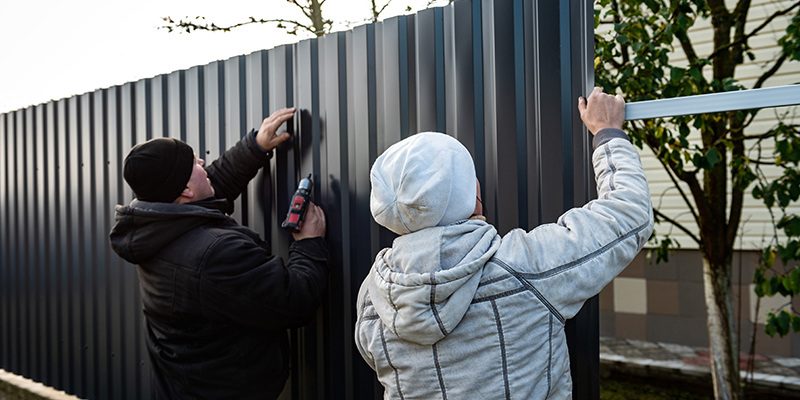
In planned communities, HOA fences have become a popular topic of discussion. While homeowners may feel it is their right to put up a fence any time they want, it’s not so simple when an HOA is involved. There are rules that homeowners must take into account. Sometimes, HOAs even prohibit fences altogether.
Why Are HOA Fences Regulated?
The primary objective of a homeowners association is to protect property values in the community. One way it accomplishes this is through the enforcement of architectural rules. Architectural rules cover many elements, including home exteriors, sheds, driveways, and roofs. They can even cover fences.
It is not uncommon to find HOA fence restrictions in a community’s governing documents, especially in single-family neighborhoods. These restrictions seek to promote consistency in the design and character of the homes in the association. When homes look uniformly and aesthetically pleasing, their property values tend to increase thanks to a boost in curb appeal. The community can also market itself better to potential buyers.
What Happens If You Put Up a Fence Without HOA Approval?
The chief consequence of erecting an unapproved fence is its removal. Homeowners may feel tempted to bypass HOA rules and put up a fence without securing permission from the board or architectural committee. This will only result in trouble, though.
Apart from being asked to remove the fence, homeowners may also face certain penalties. Putting up an unapproved fence is typically a violation of the rules, which may carry monetary fines. In some cases, an HOA may even fine a homeowner for every day the fence remains up.
As such, homeowners should aim for an HOA-approved fence. In doing so, they can avoid the violation strike and fine. They can also avoid the hassle of putting up and tearing down a fence, along with the time and monetary expenses that come with it.
Common HOA Guidelines on Fences
Fence rules usually fall under an association’s architectural guidelines. Therefore, homeowners must be prepared to go through the application process when seeking HOA-approved fencing. This typically means filling out paperwork, submitting supporting documentation (blueprints, design features, etc.), and waiting for the board’s decision.
To make the process smoother, homeowners should familiarize themselves with the fence rules in their HOA. While the rules on HOA fences can vary from one community to another, some are more common than others.
1. Setback
A setback is the required distance between a fence and a property line. Apart from HOA-mandated setbacks, there may also be local ordinances that require owners to install fences a certain distance from their property line. Because it’s difficult to determine property lines by looking at the lawn, homeowners should check their community plat or property survey.
 2. Height Requirement and Restriction
Most associations require fences to meet a certain height or never go beyond a certain height. For example, an HOA may mandate that fences stand at least 6 feet. It is also common for HOAs to impose a limit on the width of individual slats. More often than not, such requirements concern aesthetics and visibility. If fences are too high, they may obstruct views of the neighborhood.
3. Design Requirement
Every community has a personality or style, and homes must match this in terms of design. After all, a futuristic fence would look out of place in a community filled with colonial houses. That is why fences in HOAs must typically follow the neighborhood’s aesthetic. In addition to the style, associations may also regulate the color scheme of fences.
 4. Material/s Used
Another thing associations may regulate is the material homeowners use to construct fencing. Some HOAs prohibit homeowners from using certain materials when building fences, while others are much looser in their material requirements. It depends on the association.
5. Licensed Contractor
Some owners might want to construct their fences themselves, but it is essential to review the HOA’s rules first. Some associations require homeowners to hire licensed contractors for architectural improvements or modifications. This is mainly due to liability and zoning concerns, as contractors are more adept at construction and aware of local laws. There may be city or county permits that must be secured in addition to an HOA fence permit.
 6. Maintenance Obligations
In HOA communities, homeowners must fulfill certain maintenance obligations. These obligations extend to fences as well. For example, an association may require homeowners to clean and even repaint their fences every X number of days or weeks.
Frequently Asked Questions
Here are the answers to the most frequently asked questions about HOA fences.
Can an HOA Prohibit Fences?
 An HOA not allowing fences is not uncommon. Countless associations prohibit homeowners from constructing fences. However, whether or not a particular HOA has this power depends on state laws and their governing documents.
Some state laws prohibit HOAs from banning fences altogether. One example is Texas. In 2022, the Texas government passed a law prohibiting associations from enforcing a restrictive covenant that prevents owners from adopting security measures, including installing a perimeter fence.
Homeowners should also ensure that fence restrictions exist in the governing documents of their HOA. If the restrictions are absent in the governing documents, then the HOA may not have the power to enforce them.
What Is the Legal Height of a Fence Between Neighbours in an HOA?
Most fencing laws and ordinances are broad or unspecific. However, local laws often limit residential artificial fences to 4 feet in front yards and 6 feet in backyards. That being said, it depends on the location. Homeowners should check their local laws as well as their HOA’s rules.
Who Owns the Fence Between Two Properties?
Fence laws can vary from one state to another. In general, though, two homeowners who share a fence (called a boundary fence) also share ownership over it. That means they also share the maintenance obligations related to that fence. If a homeowner wishes to retain ownership of a fence, it is important to allow a setback.
How Do I Get Around HOA Fence Rules?
The short answer is you don’t. Unless an HOA’s fence rules are illegal or unenforceable, homeowners must follow them. Homeowners enter an agreement with their HOA the moment they buy their house. This agreement legally binds homeowners to the covenants and rules of the association.
Can My HOA Force Me to Take Down My Fence?
Yes. If the fence violates the HOA’s rules or was installed without permission, the HOA can force a homeowner to remove the fence. Removing the fence also comes at the expense of the owner. This is why homeowners need to review their governing documents first and follow the rules of the HOA.
Don’t Be Afraid to Ask for Help
Homeowners may find it tricky to navigate the rules surrounding HOA fences. Fortunately, they can ask for help from their HOA board or the community manager. It is always better to seek advice than to act without guidance. In doing so, homeowners can avoid violations and the related costs that come with them.
HOA management software makes violation tracking and communication easier for everyone. Get the best in the industry with Condo Manager. Call us today at (800) 626-1267 or contact us online to request a demo!
RELATED ARTICLES:
- HOA Architectural Requests: Keeping Track Of Them With An HOA Management Software
- Top 10 Important HOA Rules Every Homeowner Should Know
- Know Your HOA Rental Restrictions Before Leasing Out Your Home

 After verifying the violation’s validity, board members might think holding a hearing is the next step in processing HOA violations. But, not all violations require a hearing. That’s because some violations are not as severe. A simple warning letter may be enough depending on the rule being broken and the resident’s violation history.

 Generally speaking, rental restrictions aim to protect property values and promote community standards. An HOA with more renters usually sees higher liability insurance rates and lower property values. Other financial institutions, such as banks, are also more hesitant to offer loans to HOAs with more renters.
 Many homeowners’ associations screen prospective tenants. This allows the HOA to avoid renters that might harm the community. Often, the board will implement this by asking for the tenant’s application form. The board will then review the application before the homeowner can finalize the lease agreement.
 A community garden can enhance the appeal of the neighborhood. Simple landscaping does wonders to make concrete sidewalks look great. Can you imagine what a whole bed of colorful flowers and vegetables can do?
 The first thing you must do is check whether or not there is a demand for a garden in your community. There’s no use in starting a community garden if no one’s going to sign up for it. To gauge resident interest,
  The final step is to educate and share. Give owners gardening tips and distribute how-to guides. You may even want to consider hosting a seminar for beginner gardeners. Residents are more likely to continue participation if they succeed in their efforts, so you want to do everything you can to help them get there.
 1. Number of Pets
 4. Registration Required
 Dogs, cats, birds, and fish are the most common pets that owners keep. But, there are also homeowners who wish to keep goats or chickens in their backyards. This poses a dilemma for a lot of HOA communities.
 The
The 
 How often you should mow your lawn
 How many vehicles you can park on your property
 10. Noise Rules

 Once a violation has occurred, the association’s response typically begins with written notice. This notice of violation will contain the details of the infraction. Normally, homeowners will have the opportunity to correct the violation without further consequence, especially if it is their first violation. However, depending on state laws and the governing documents, some HOAs do proceed with

 LIVE CHAT