
Is An AI HOA Management Software Better Nowadays?


HOA management has increasingly relied on digital platforms to handle operations. Naturally, artificial intelligence (AI) developers have also created software that relies on AI to help you manage communities. But is AI HOA management software reliable? Is it a better option for your community? Let’s examine the benefits and risks of this new technology.
What Is AI?
Before discussing AI’s pros and cons for HOA communities, we need to define the technology. AI is a technology that makes software and hardware smart enough to handle tasks and answer questions that require human intelligence. They can make decisions, translate languages, and offer solutions to various problems.
How is AI Used in HOA Management?
Like most industries, AI can have several different applications for HOA communities. In the HOA management world, one of the biggest potential benefits is the ability to predict when equipment, appliances, and assets will deteriorate. As a result, they can use that data to allocate a budget and schedule when certain things need repair or replacement.
AI can also enhance residents’ experiences by providing personalized services and communication. For example, virtual chatbots and concierges can point homeowners to the right facilities and receive service requests. This improves their quality of life and reduces the board’s workload.
Apart from this, one of AI’s most attractive points is that it can help board members make decisions regarding various issues. They can provide solutions regarding financial management, landscaping, and security. This can be useful if the board members don’t know what next steps to take.
Finally, AI HOA management software can automate repetitive tasks such as making payments and managing maintenance schedules and collections.
The Risks of AI HOA Management Software
AI-powered HOA management software can analyze large amounts of data, identify patterns, and spot trends humans often neglect. However, AI software is still limited in many ways. Let’s examine the risks and pitfalls of using AI-powered software for community management and operations.
1. Data Dependency
AI can only be efficient if you feed it a lot of data. Data is training for AI technology, so it can only function and provide efficient solutions with a lot of information. Incomplete information can often lead to significantly different results. The AI might recommend an action that is impossible—or worse, harmful.
In addition, AI can only work effectively if you feed it accurate and reliable data. For example, if you teach an AI tool that 1 + 1 = 3, the AI will use that information. Therefore, there is a large potential for errors. Developers and users must provide AI with representative and factual information. Otherwise, AI can work against and not for the HOA board and community.
Finally, AI needs to be trained constantly with updated information. This can be difficult as the human world is continuously changing and evolving. Everything from market fluctuations to unexpected events and regulatory changes can make AI recommendations and conclusions unreliable.
2. Biased Decision-Making
AI software tends to perpetuate biases in the data they have been rained on. This is why some technology and linguistics researchers have found that large language models like Google Gemini and ChatGPT hold racist stereotypes about those who speak African American vernacular.
Homeowners’ associations are bound by federal and state laws such as the Fair Housing Act, which protects people from discrimination based on race, gender, color, familial status, disability, religion, and national origin. If the AI HOA management software they use has these biases, they may accidentally discriminate against these groups of people because of AI.
3. Data Privacy Issues
 One of the largest issues with using AI HOA management software concerns data privacy. Since AI technology relies on large amounts of data to operate, homeowners may be apprehensive about giving away their information. The data could be misused or compromised and lead to stalking, identity theft, and other cybercrimes.
In addition, there are concerns about surveillance. Residents usually value privacy and want to be able to go about their business within their own homes. Using AI technologies like biometric scanners and facial recognition can feel invasive, as people might think they are being monitored more closely.
Furthermore, there are risks related to malware and data breaches. AI systems are often decentralized, raising the risk of vulnerabilities. Hackers can steal the residents’ and the HOA’s sensitive data, such as bank information, account numbers, and personal details. This could lead to significant financial losses for the entire HOA community.
4. Liability
If an HOA or management company chooses to use AI software, they should know that they may be exposed to liability. The association is typically responsible for protecting the homeowners’ sensitive information. Disgruntled homeowners may file a lawsuit if the AI HOA management software is hacked.
5. Over-Reliance on AI
HOA managers and board members who use AI might rely too much on the technology. While AI predictions can be helpful sometimes, they are usually based on probability. They are not foolproof. As we’ve discussed, AI needs vast amounts of constantly updated data. Moreover, these technologies can be prone to bias.
 6. Lack of Transparency
AI algorithms are complex. They can be difficult to understand for homeowners, making them suspicious of the AI’s decisions. If homeowners feel that the software’s conclusions are unjust or arbitrary, this could lead to conflict and potential lawsuits.
Is AI HOA Management Software Better Nowadays?
AI might have improved in the last few years, but it seems there is a long way to go when using AI in HOA management software. These technologies rely heavily on human input, which can create many pitfalls and risks. These limitations can make relying on AI software to manage communities difficult.
Condo Manager is an HOA management tool that helps communities simplify operations through technology. Reach out to us at (800) 626-1267 or contact us online to request a demo!
RELATED ARTICLES:
- Solar Panels In HOA: Homeowners Should Know This First
- Drainage Problems In HOA: What To Do?
- Enforce HOA Parking Rules To Avoid Parking Issues In Your Neighborhood

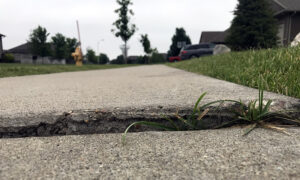 For non-gated homeowners associations, sidewalks and roads likely fall under the jurisdiction of the local government. In that case, if an HOA receives a service request concerning sidewalks and roads, it is best to forward it to the correct authority.
 Proper landscaping can breathe new life into any space. The added greens and beautiful layout can significantly boost the curb appeal in a community.
 Heating, ventilation, and air conditioning (HVAC) systems require regular maintenance. This will minimize the risk of a breakdown.
 A common pain point among management companies is having to spend time and resources on employee training.
 If you ask anyone on an HOA board what the most challenging aspect of running an HOA is, chances are most people will say financial management.
 Whether your software is cloud-based or relies on a local server, you can’t deny that having easy access to data is a huge benefit. When you do things manually, you tend to organize your paperwork into piles or drawers. Searching for documents requires time and a lot of flipping through pages. Software, though, makes this process infinitely simpler. You can search for documents using keywords and organize them with just a few clicks.
 Homeowners are busy. Between 9-to-5 jobs and their personal lives, they don’t always remember to pay their dues on time.
 Clearly, HOA delinquent accounts put homeowners associations at a disadvantage. They have a negative effect on your bottom line and can force your board to make unpopular decisions such as raise dues or levy special assessments.

 It is not unusual for regular assessment amounts to vary each year. A surplus in the budget for one year could affect the following year’s budget.

 The HOA software payment processing feature means easier tracking for board members or managers. Since most payments are made online, you can use the software to track which homeowners have settled their accounts and which haven’t. Having digital records of financial transactions will make financial tasks such as accounting and bookkeeping much easier as well.
 One of the best things about HOA software is that you can access it anywhere and anytime. As long as you have an internet connection, you can use your desktop, laptop, tablet, or smartphone. Board members can continue to monitor the association even if they are outside the office.
 Property management accounting software is no longer as expensive as before. Advancements in technology have made these programs accessible at lower price points. Even though there is still an upfront payment, you will save money in the long run.
 Property management accounting software comes with security features so you won’t have to worry about confidential or sensitive data being stolen or leaked.
 Associations spend a lot of time connecting accounting and service records with their communications. You have to jump between word processors and spreadsheets, cross-reference records, and double-check emails to get the information you need.

 LIVE CHAT